What actually makes a LinkedIn post travel
Viral posts win the first two lines, reward the click with tight value, and spark comments. Design for skimmability on mobile: short lines, clear structure, and one concrete takeaway. If you operate multiple profiles (e.g., renting LinkedIn via LinkedIn renting companies or you buy verified LinkedIn accounts), the same rule holds — clarity beats volume.
A fast structure that works
- Hook (≤ 8 words): specific, curiosity-led.
- Line 2 (rehook): raise stakes or set the promise.
- Context (3–5 lines): who/what/why in plain English.
- Value section: list or mini-framework — each line under ~12 words.
- Power ending: one punchy takeaway.
- CTA: ask one simple question to invite comments.
Keep paragraphs short. Break lines often. Avoid “walls of text.”
Five formats you can reuse today (with tiny examples)
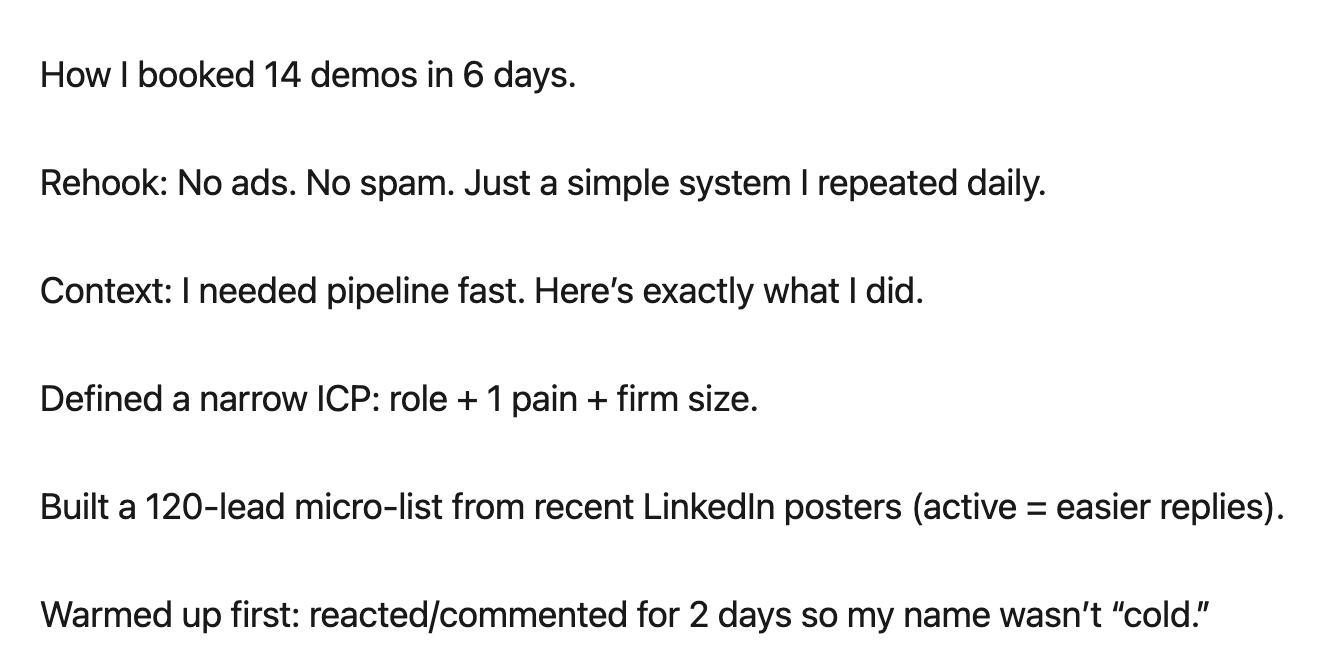
1) “How I” breakdown (story + result)
- Hook: “How I booked 14 demos in 6 days.”
- Close with the exact 3 lines you sent.
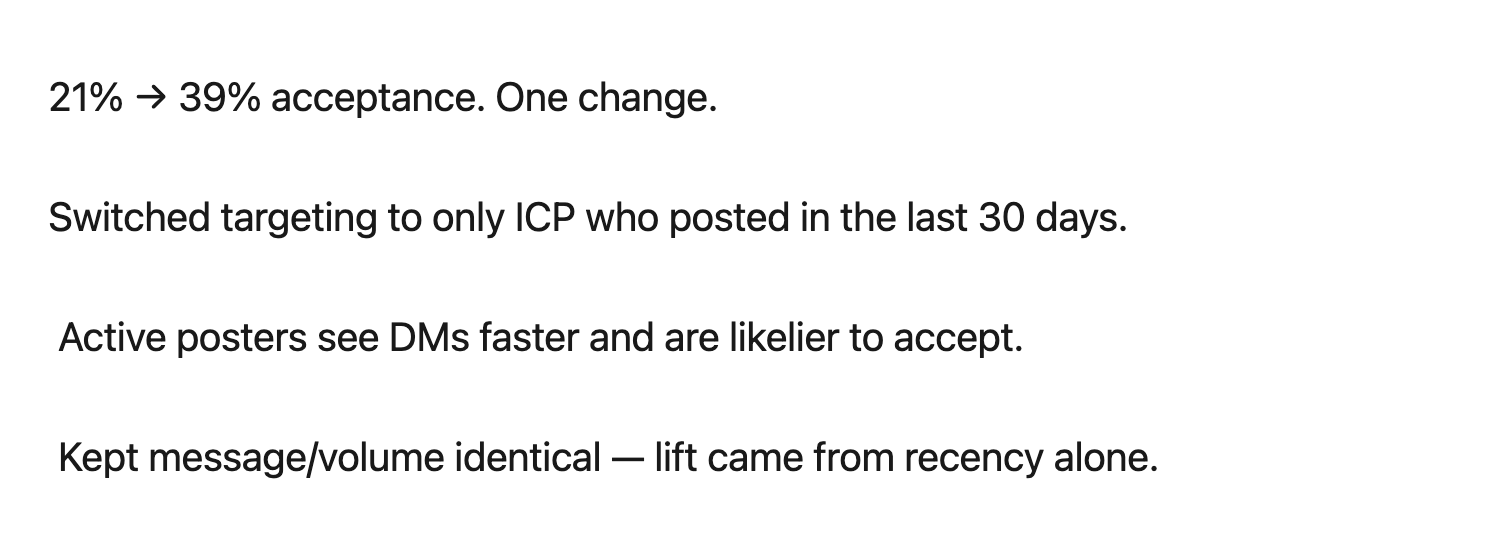
2) Before → After (with one lever)
- Hook: “21% → 39% acceptance. One change.”
- Explain the single change in 3 lines.
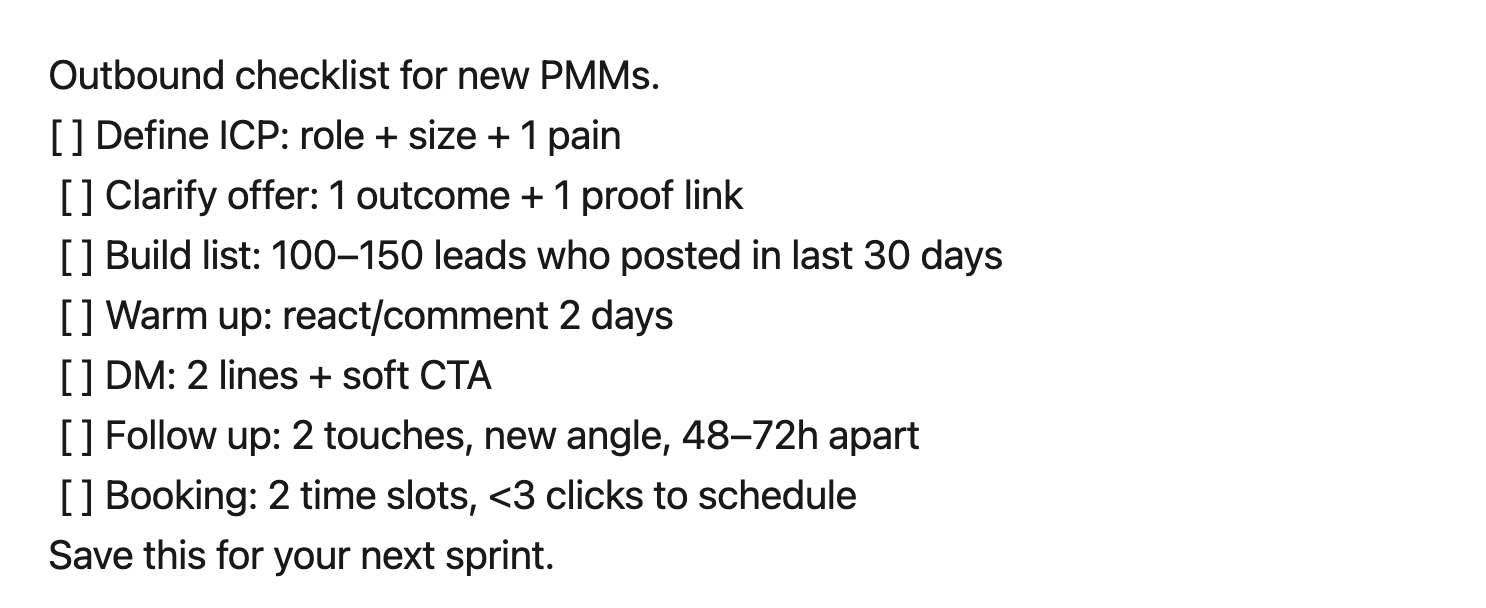
3) Checklist (saved-post magnet).
- Hook: “Outbound checklist for new PMMs.”
- 7 short checks people can copy.
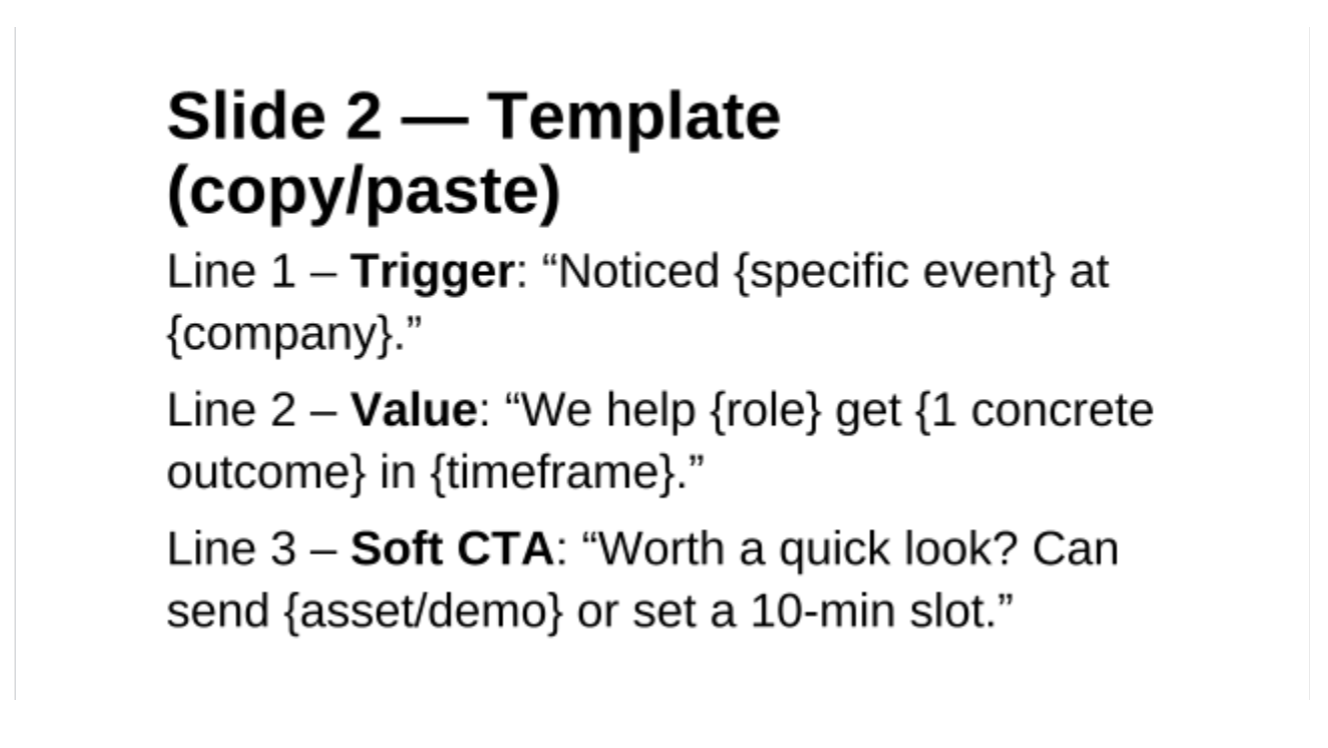
4) Carousel explainer (document post).
- Cover: “DM teardown: 3 lines that win.”
- Slides: Problem → Template → Example → CTA.
5) Contrarian take (with proof).
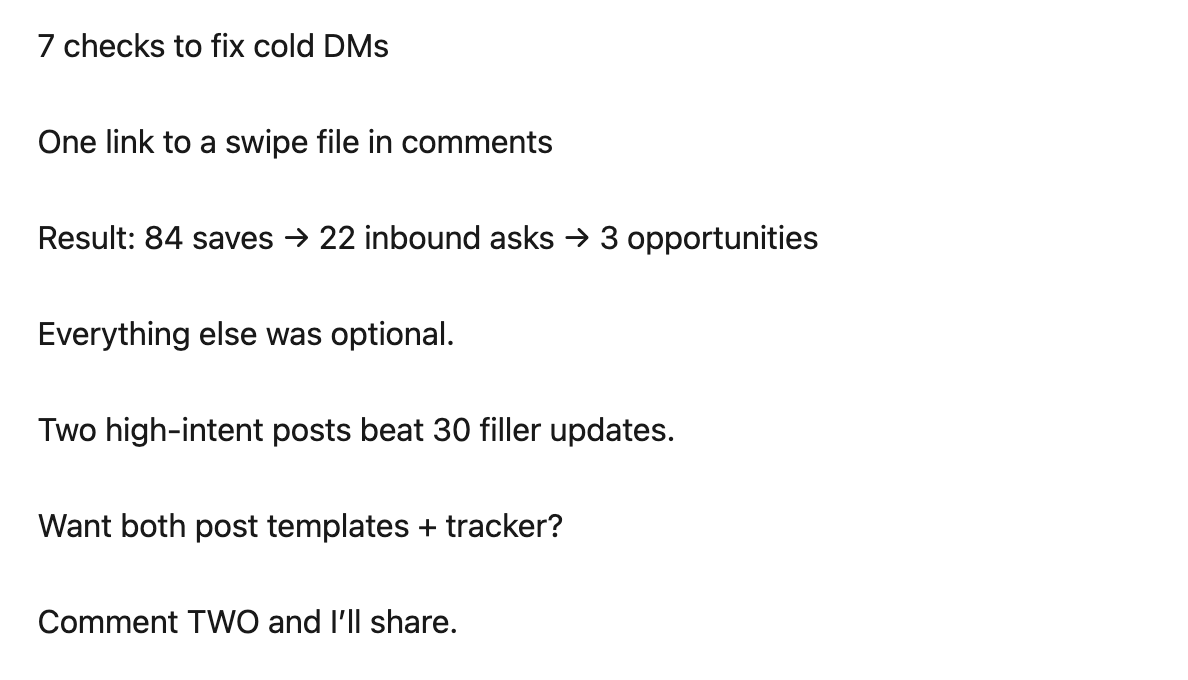
- Hook: “Posting daily isn’t the point.”
- Show 2 posts/month that drove the pipeline.
Micro-templates (plug and post)
Hooks
- “I tried X for Y days. Here’s what happened.”
- “Everyone says A. Here’s why B wins.”
- “The 7-line message that landed Z.”
CTAs
- “What’s one line that gets you replies?”
- “Want the template? Comment ‘TEMPLATE’.”
Cadence, timing, and the first hour
Post when your audience is online (test two or three slots, keep the winner). Two to four strong posts per week beat daily fluff. In the first hour, reply fast and ask follow-ups — comments and dwell time are your lift.
KPIs that matter (and when to iterate)
Track: comments per view, saves per view, and reply rate on DMs prompted by content. If any dip, fix the hook or tighten the value section. Views alone are a vanity metric.
Operating across multiple profiles (keep this simple)
Whether you rent LinkedIn account seats, work with LinkedIn renting companies, or buy LinkedIn accounts, centralize hooks, tone, and approved templates so every profile sounds consistent. If you buy verified LinkedIn accounts, post regular, on-brand content to build credibility — profiles without content won’t convert.
One complete example
Hook: “I sent 92 DMs. 23 demos booked.”
Rehook: “Here’s the 3-line message, and 2 fixes I’d make.”
Context: ICP: RevOps leads at 50–200-person SaaS. Tue–Thu, 8:30–10:00 AM.
Value:
- “Saw your CPQ rollout — congrats.”
- “Teams see quote errors rise 12–18% first quarter.”
- “9-min teardown? If not, I’ll send notes.”
- Follow-up in 48h with one proof line. No links in the first message.
- Takeaway: Short, specific, helpful wins replies.
- CTA: What’s one line that gets you responses?
From idea to pipeline
Use LinkUnity’s verified, ready-to-use profiles to cut ramp time, lower risk, and keep momentum — backed by replacements and responsive support. Lower risk, higher trust, faster testing — ideal whether you’re renting LinkedIn for campaigns.